

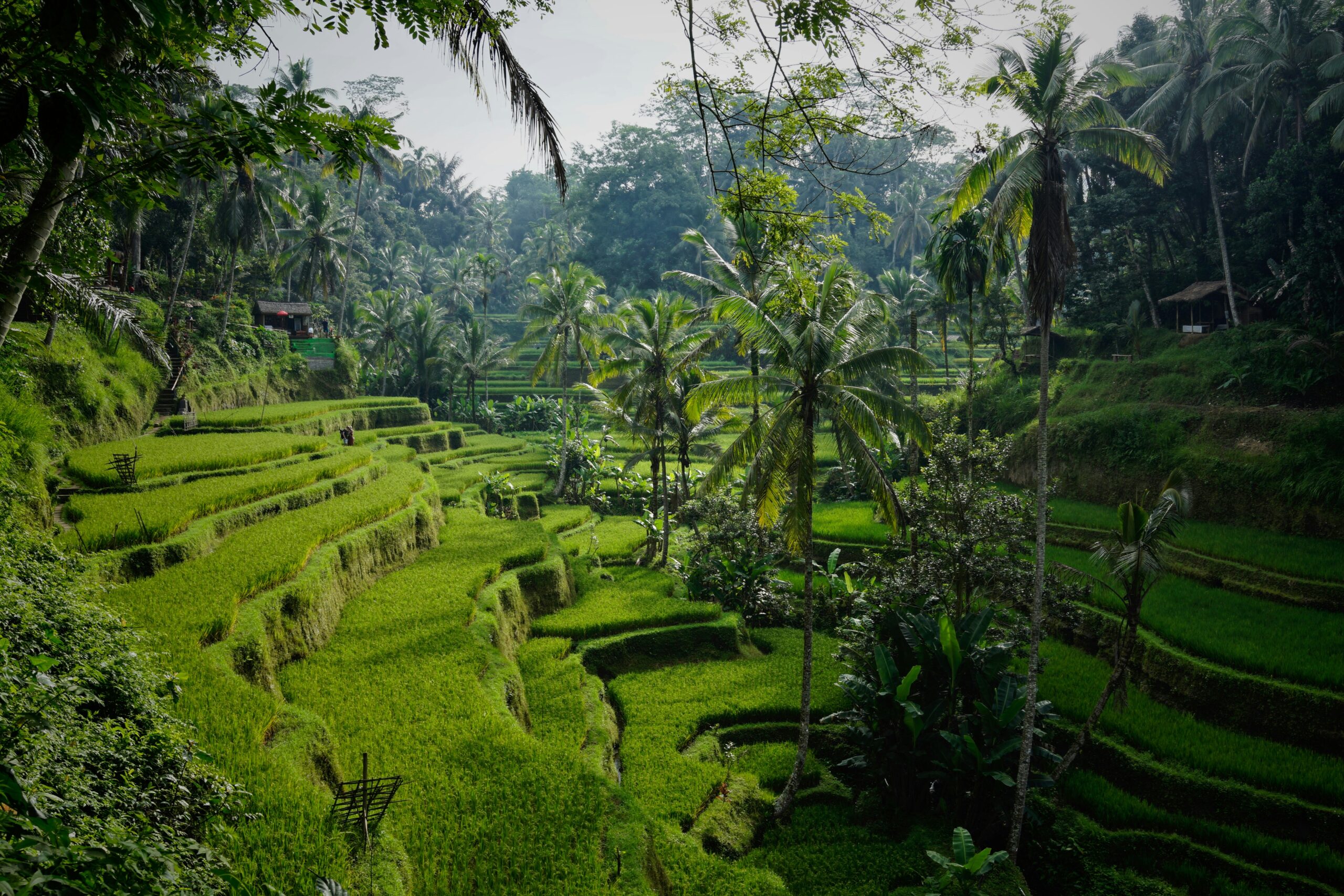
Ubud is one of Bali’s best-known inland destinations, but it is more than a collection of cafés and souvenir shops. The surrounding area is a patchwork of rice fields, small villages, temples, craft studios and forested valleys. Spend a little time exploring beyond the busiest streets and you will find plenty of reasons to stay longer than a quick afternoon visit.
This guide brings together some of the most rewarding things to do in and around Ubud, with practical advice on timing your visits and planning a route that does not involve spending the whole day in traffic.
1. Walk through the Tegallalang Rice Terraces
The Tegallalang area is famous for its layered rice fields and views across the valley. Visit earlier in the day if you want cooler temperatures and a quieter atmosphere. There are paths and viewpoints at different levels, and some sections involve uneven ground and steps. Wear shoes with grip and take care after rain.
Rice terraces are working agricultural landscapes, not just photo locations. Some paths cross land managed by local farmers, and access arrangements can vary. Follow signs, respect marked areas and check any local entrance or contribution arrangements before walking through.
2. Visit Ubud Palace and the town centre
Ubud Palace, known locally as Puri Saren Agung, sits in the centre of town and is an easy stop when exploring on foot. The surrounding streets are full of small shops, galleries and places to eat. The nearby traditional market is another familiar landmark, although the atmosphere and products can change throughout the day.
Allow time to wander rather than rushing between stops. The centre can be busy, particularly around midday and in the evening, so a morning walk is often more comfortable.
3. Explore the Sacred Monkey Forest Sanctuary
The Sacred Monkey Forest Sanctuary is a forested temple complex and a habitat for long-tailed macaques. It offers shaded walking paths, stone architecture and a glimpse of how nature and sacred spaces sit alongside one another in Ubud.
Follow the sanctuary’s visitor rules. Do not feed or touch the monkeys, keep food and loose items secured, and avoid making sudden movements around the animals. They are wild macaques, not pets, and visitors should give them space.
4. Experience a water temple
Tirta Empul, near Tampaksiring, is known for its spring water and purification pools. It is an active religious site, so visitors should dress appropriately, follow the temple’s rules and observe respectfully. Participation in a ritual is not simply a photo opportunity; if you are unsure what is appropriate, ask staff or a local guide before entering ceremonial areas.
Because Tirta Empul is outside central Ubud, combine it with nearby stops rather than making several long cross-island drives in the same day.
5. Discover Ubud’s art and craft scene
Ubud has a long association with painting, wood carving, textiles and other forms of Balinese art. Visit a gallery or museum to understand the range of styles, then explore nearby craft villages if you are interested in seeing how particular works are made. Ask permission before photographing artists or workshops, and check whether a studio is open to visitors.
If you plan to buy artwork, take time to look closely at materials and workmanship. A thoughtful purchase from a genuine local maker can be a more meaningful souvenir than something bought in a hurry.
6. Visit a waterfall near Ubud
Several waterfalls are within reach of Ubud, including Tegenungan and other falls in the wider Gianyar area. Each has different access, facilities and crowd patterns. Some require steep stairs or walks over wet ground, so footwear matters.
Water levels and currents can change after heavy rain. Follow safety signs, do not climb barriers and avoid entering water when conditions look unsafe. Check current access information before setting off, as local arrangements may change.
7. Take a countryside walk
One of the simplest ways to enjoy Ubud is to leave the busiest streets behind and walk through the surrounding countryside. The Campuhan Ridge Walk is a popular option for open views and a relatively accessible route, while smaller village lanes can offer quieter glimpses of daily life.
Start early or later in the afternoon to avoid the strongest heat. Bring water, wear sun protection and be mindful that narrow paths and lanes may also be used by residents and local traffic.
8. Join a Balinese cooking class
A cooking class is a relaxed way to learn about ingredients and dishes that appear in Balinese home cooking. Many classes include a market visit or an introduction to herbs and spices, followed by preparing several dishes. Check the menu and dietary options before booking, especially if you have allergies or specific food requirements.
9. Enjoy a spa or wellness afternoon
Ubud has a wide choice of spas and wellness studios, from simple massage rooms to more elaborate retreats. After a few days of sightseeing, a quieter afternoon can be a welcome change. Check what a treatment includes, the duration and the total price before confirming.
10. Add an outdoor adventure
If you want something more active, the Ubud region is a convenient base for experiences such as white-water rafting and ATV rides. Compare the activity location, actual duration, safety briefing, equipment and transfer arrangements before booking. Not every activity is suitable for every age or fitness level, so read the operator’s requirements carefully.
How to plan a day around Ubud
Ubud’s attractions are spread across the town and surrounding villages. A practical day might begin with Tegallalang, continue to Tirta Empul or another nearby cultural stop, then return to town for a late lunch and an easy afternoon. Another day could focus on the Monkey Forest, palace, market and galleries without needing a car for every stop.
For a route with several locations, a private driver in Bali can help connect the stops without having to navigate unfamiliar roads. If you are weighing up self-drive against a car with a driver, see the Bali car rental guide. You can also use the sample Bali itinerary to fit Ubud into a longer trip.
When is the best time to visit Ubud?
Ubud can be visited throughout the year. The drier months are often easier for outdoor walks and exploring rice terraces, while the wetter months can make the landscape especially green. Rain can make paths slippery, so adjust your plans to the conditions on the day. Early mornings are generally a good choice for popular attractions, regardless of season.
Frequently asked questions
How many days should I spend in Ubud?
Two or three days gives many visitors time for the town, rice terraces, a temple and one or two nature or activity stops. Stay longer if you prefer a slower pace or want to explore villages beyond the main centre.
Can I explore Ubud without a driver?
Yes. The central area is walkable in places, and some visitors use ride-hailing or local transport for individual trips. A driver can be more convenient when combining several attractions outside town.
Are the rice terraces free to visit?
Access arrangements vary by location and viewpoint. Some areas request an entrance fee or local contribution, so check signs and follow the instructions at the site.
Are the monkeys in Ubud safe?
They are wild animals and should be treated with caution. Do not feed or touch them, secure your belongings and follow sanctuary staff instructions.
Final thoughts
The best Ubud experience comes from mixing the famous sights with time to explore at a slower pace. Visit a rice terrace, learn about local culture, enjoy the food and leave space for a walk or an unplanned stop. With a sensible route, Ubud can be one of the most memorable parts of a Bali holiday.


